Faster employees. Where is the business return?
Zhidx examines the distance between individual AI productivity gains and company-level growth.
Zhidx · 15 min read AI JournalArtificial intelligence / source-attributed readingArticle index
The Decoder reports on AI accelerator memory procurement and the constraints described by its sources.
Huawei tells customers to find their own AI chip memory, effectively outsourcing procurement to the black market
Huawei can't get enough memory for its AI chips, pushing customers onto the black market. A sophisticated smuggling network has sprung up to fill the gap, exploiting a loophole in U.S. export rules.
Huawei is telling some customers to source the memory for its AI chips themselves, effectively pushing buyers onto the black market, The Information reports. The company plans to launch the Ascend 960DT early next year, which it says will double the performance of its current chips. But Huawei's Chinese suppliers can't produce enough High-Bandwidth Memory (HBM), and U.S. export rules block direct purchases from Samsung and SK Hynix. Together, those two companies control over 80 percent of the global market.
Smugglers have found a workaround. They bundle HBM with cheap server processors whose performance falls below the export threshold, then ship the packages to China through Hong Kong. Once there, workshops separate the memory chips from the processors. The process is fragile and the error rate is high, but the margins make it worth it.
Prices for smuggled HBM3E memory have jumped from a few hundred dollars to around $4,000 per unit in just one year, according to a broker in Shenzhen. Each AI chip needs six to eight units, meaning the memory alone can cost up to $32,000.
The black market doesn't run on smuggling alone. Older Nvidia GPUs stripped for parts and excess inventory from chip designers who scrapped projects or cut orders also feed the supply. South Korea's customs authority had uncovered trade violations worth $560 million by May, already surpassing the previous full-year record. A third of that total involved strategic goods like chips exported without proper authorization or with false declarations.
The Decoder · Maximilian Schreiner
Article and image rights remain with the original rights holders. No blanket reuse permission is granted by this site.
For corrections or rights enquiries, contact the site.
Zhidx examines the distance between individual AI productivity gains and company-level growth.
Zhidx · 15 min readQbitAI reports on the AI data platform and the recognition it received.
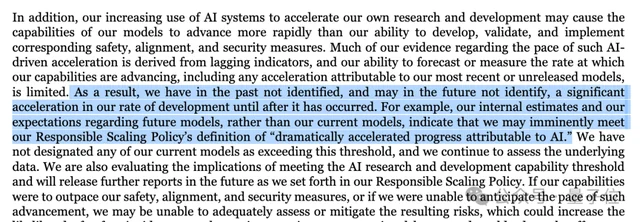
QbitAI / Liangziwei · 3 min readSource reporting on Anthropic’s revised prospectus and its discussion of AI development.
QbitAI / Liangziwei · 3 min read